
 ქართული
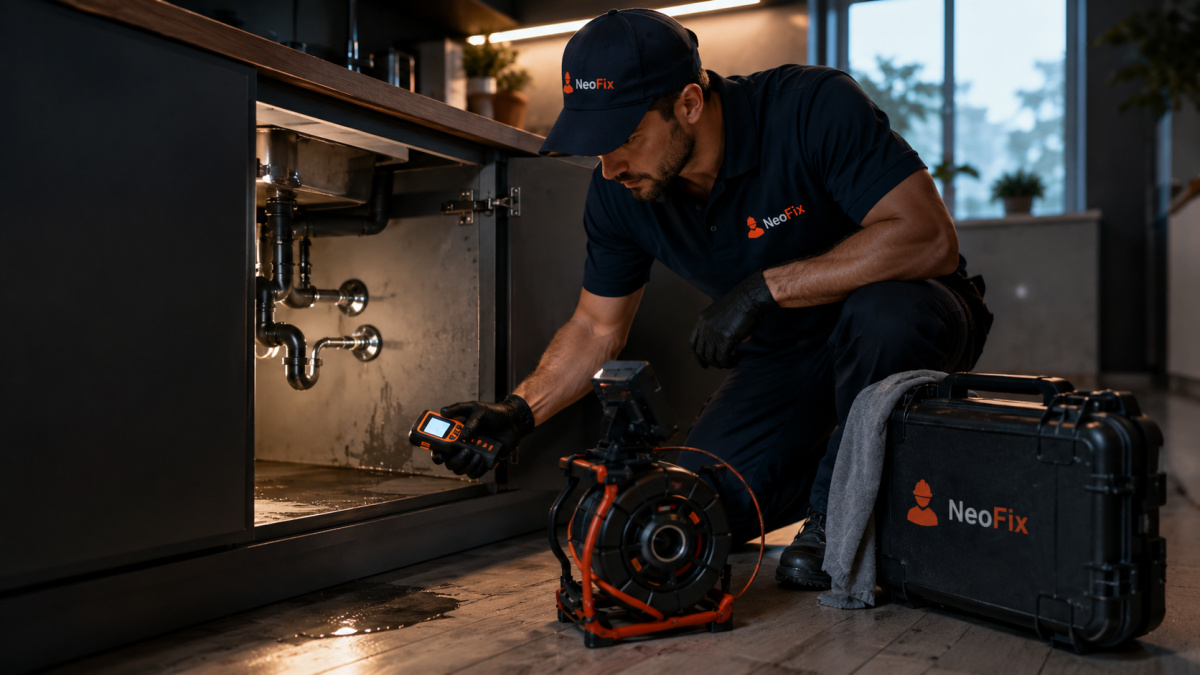
Your home is your fortress, but sometimes the biggest threat isn't an outside enemy — it's water quietly moving through the walls. A water leak is one of the most insidious and destructive problems a homeowner can run into. A drop that looks insignificant at first can silently damage your home's structure for months, spread mold, and eventually turn into thousands of GEL in financial loss.
Fortunately, this disaster can be avoided. The key is knowing what to look for. In this article, we take a detailed look at every sign and method that will help you catch a water leak at its earliest stage — and, in turn, protect your home and your budget from unplanned costs.
Catching a water leak early saves you not only significant, unpleasant expenses, but also protects your living space from the spread of mold, fungus, and bacteria. According to statistics, a water leak in an average home can waste thousands of liters of water a year, driving up your water bill, polluting the environment, weakening load-bearing structures, and leading to structural damage and mold growth.
Why Are Hidden Water Leaks Dangerous?
If water leaks unnoticed for a certain period of time, the consequences can be quite serious and costly:
- Interior damage – wet walls, ruined wallpaper, paint, and sheet materials, damaged flooring…
- Health risk – moisture creates the ideal environment for mold and fungus to develop, which is quite common, especially in summer and the hot season.
- Financial costs – repair work, the need for renovation, and a high water bill.
- Structural damage – a long-term water leak can damage a home's load-bearing structure and even its supporting walls, which can lead to structural collapse and reduce the building's resistance to earthquakes.
That's exactly why it's important to diagnose and catch a water leak in time, before the problem grows into a disaster and causes various kinds of damage.
Key Signs of a Water Leak
Visual Indicators
Stains on walls and ceilings – one of the most obvious signs is water staining. These can be brown, yellow, or dark stains that gradually grow in size. Pay particular attention to the corners of the ceiling, where signs of a water leak most often show up.
Bubbling, swelling, and flaking paint – if paint starts to swell or bubbles appear, it can be the result of a water leak. This often shows up a few weeks after the leak begins.
Mold and fungus appearing – a damp environment is ideal for mold and fungus. If you notice dark stains or an unusual smell, especially in places where water pipes run, it can be a sign of a hidden leak.
Changes in Your Water Bill
A sudden jump in your water bill – if your water bill has risen sharply for no clear reason, it can be the result of a hidden leak. Compare it carefully against previous months' bills and investigate every possible cause.
The water meter keeps running – if you aren't using any water but the meter is still moving, that's a clear sign of a leak. This is one of the most reliable methods for detecting a hidden leak.
Common Locations Where Water Leaks Happen
Bathroom and Toilet
The bathroom is the most vulnerable spot for water leaks. Pay particular attention to:
- Around the toilet – check the base of the toilet and the floor around it
- Under the bathtub – inspect underneath the bathtub and the pipe joints
- The shower stall – check the corners of the shower stall and any open silicone seams
- Sink pipes – regularly check every sink pipe and connection
Kitchen
The most problematic areas in the kitchen are:
- Under the sink – especially around the pipes for the washing machine and dishwasher
- Around the dishwasher – pipe connections and valves
- Refrigerator lines – if the refrigerator has a water line (for an ice maker)
Basement and Attic
These areas often get overlooked, but hidden water leaks frequently happen exactly there. Areas worth particular attention:
- The main water line – where water enters the house
- The water heater – around it and at the pipe connections
- The heating system – radiators and pipes
Simple Tests to Detect a Leak
The Water Meter Test
This is the most effective and simplest method:
- Turn off every faucet and water-using appliance (taps, washing machine, shower…)
- Note the exact meter reading
- Check it again after 2–3 hours
- If the reading has changed, water is leaking somewhere in your home!
The Toilet Tank Test
The toilet tank is often the source of a leak:
- Add a few drops of food coloring or a colored cleaning agent to the tank
- Check the toilet bowl and the surrounding area after 15–20 minutes
- If you notice colored stains, that means water is leaking from the tank
Modern Technology for Detecting Water Leaks
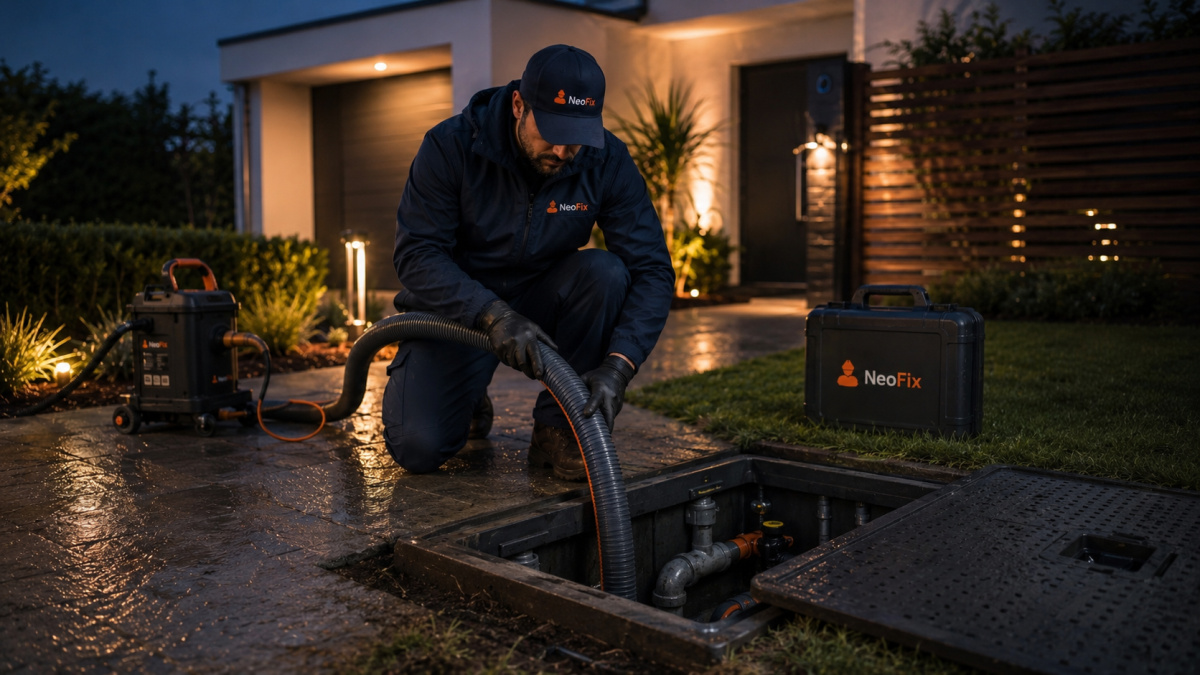
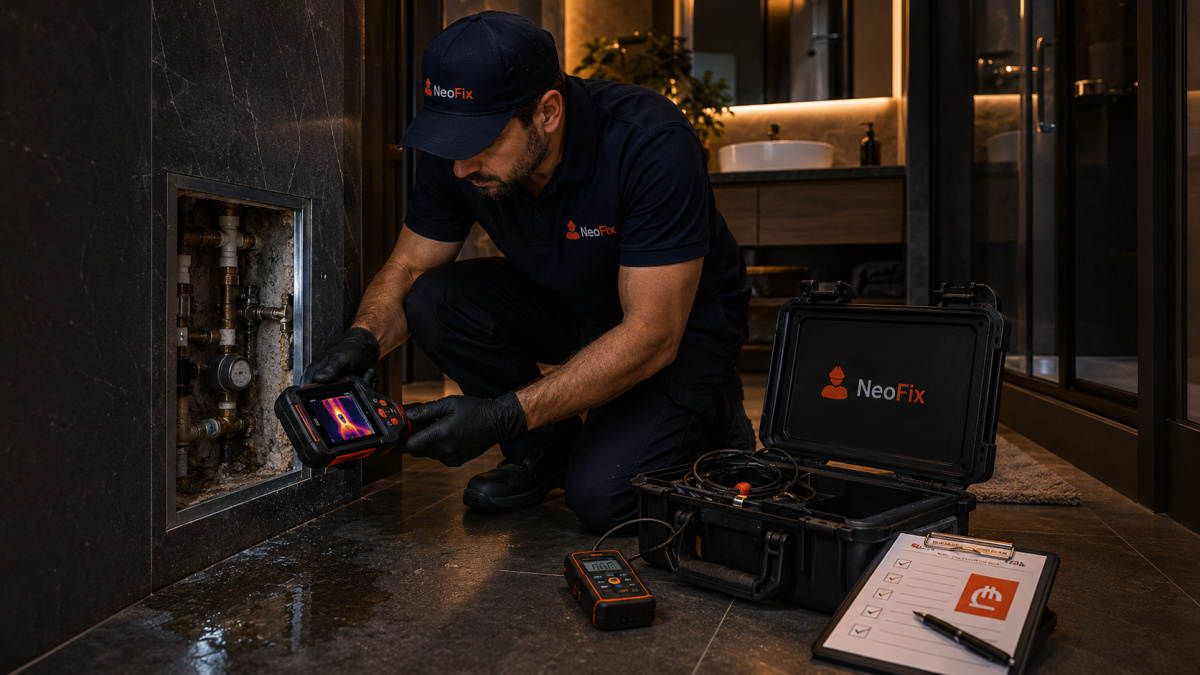
NeoFix's professional plumbers use specialized equipment and devices that make it possible to pinpoint the exact location of a leak in the shortest possible time, without tearing into walls or floors!
Effective technologies and tools for detecting water leaks:
- Thermal camera – reveals the source of moisture inside a wall.
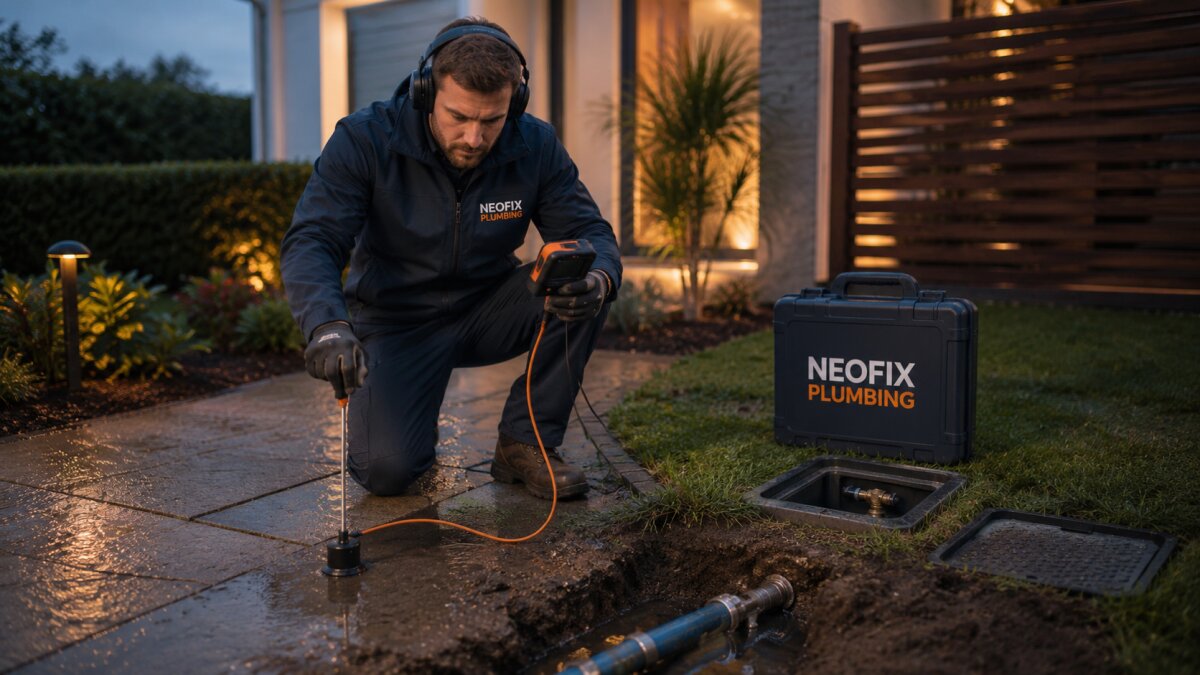
- Acoustic detector – picks up the sound of flowing water in pipes.
- Moisture detector – measures moisture levels on various surfaces.
- Tracing systems – for pinpointing the exact location of pipes.
Diagnostics like this can save you not only time and money, but also spare your home unnecessary demolition.
If the damaged pipe is underground, see our article Underground Water Leak Diagnostics: Modern Methods, Technology, and Practical Tips, and for detecting a leak and the steps to take next, read Water Leak Diagnostics: How to Detect a Leak and What to Do?
Preventive Measures – How to Avoid Water Leaks
Regular Inspection
Monthly check-ups – set aside time at least once a month to check every water point in your home.
Seasonal inspections – especially at the start of winter and summer, when temperature swings have the biggest impact on pipes.
Pipe Maintenance
Replacing old pipes – if the pipes in your home are over 20 years old, it's better to replace them gradually before it becomes an emergency.
Controlling water pressure – water pressure that's too high damages pipes. Monitor your water pressure and install a pressure regulator if needed.
Pipe Insulation and Wrapping
Wrapping pipes – wrapping pipes for winter protects them from the effects of temperature swings, which reduces the risk of pipe damage.
A water leak isn't just a minor discomfort — it's a serious threat to the soundness of your home and your family's wellbeing. Stay alert, run preventive checks regularly, and never ignore suspicious signs. Remember, catching a problem in time saves you nerves, time, and money!
If you suspect a water leak but can't solve the problem on your own, NeoFix's team of professionals is always ready to help! We work 24/7, with modern equipment and high precision!