
 ქართული
An unnoticed underground water leak is one of the most common and hardest-to-detect problems in Georgia. Aging infrastructure, a lack of quality materials, and pipe wear over time mean that in many homes, yards, and streets, water is being lost without anyone noticing.
Damage to an underground water pipe often develops unnoticed. At first, it might only show up as a higher water bill, a damp patch appearing in the yard, or reduced water pressure in the system. Over time, though, even a small leak can wash away soil, damage a building's foundation, cause pavement or paving stones to sink, and waste a significant amount of water.
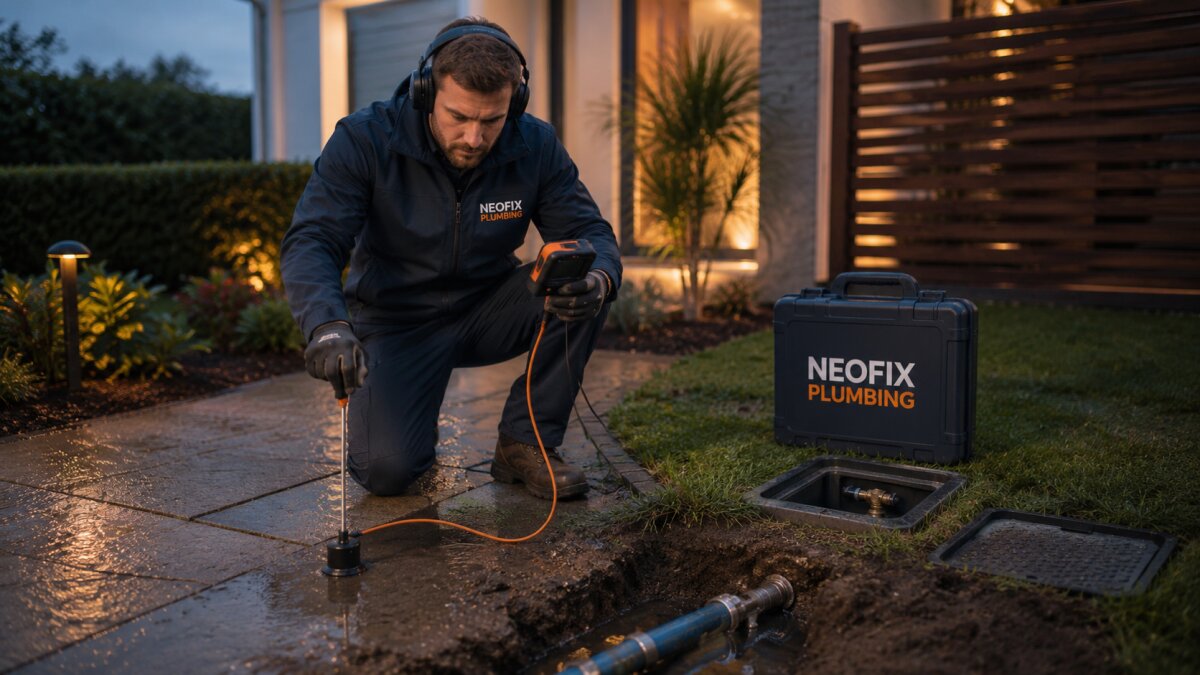
Underground water leak diagnostics makes it possible to pinpoint a damaged pipe's location using specialized equipment. With the right diagnostics, there's no need to dig up an entire yard, road, floor, or large stretch of ground. A specialist identifies the likely problem spot, and repair work is carried out only where it's actually needed.
If you suspect a leak on your property, our water leak diagnostics service team can come out and pinpoint the damage on site.
What Is an Underground Water Leak?
An underground water leak is water escaping from a pipe located in the ground, under concrete, under a road surface, in a yard, or near a building's foundation.
This kind of damage can happen on a central drinking water line, as well as in:
- a private house's yard water supply system;
- the underground utilities of a multi-unit apartment building;
- industrial and commercial properties;
- irrigation and watering systems;
- pool piping and technical networks;
- an underground heating system;
- fire hydrant water lines.
Detecting the problem is especially difficult when water doesn't surface and instead spreads through deep soil layers or in another direction.
Key Signs of an Underground Water Leak
A damaged underground pipe doesn't always create a visible puddle. Water can seep into the soil, enter a drainage system, or spread toward a building's foundation.
The following signs can point to an underground leak:
An Unexpected Jump in Your Water Bill
If your water usage habits haven't changed but your meter readings have risen significantly, a hidden leak could be the cause.
It's especially suspicious when every tap in the house or on the property is shut off, yet the meter keeps moving.
Reduced Water Pressure
Because part of the water is escaping through the damaged pipe, pressure at taps, in the shower, or in other fixtures can drop.
A pressure drop doesn't always mean an underground leak, but a damaged pipe is one of the common causes.
Damp or Soft Ground
A patch in the yard that's constantly wet, soft soil, or a puddle that doesn't go away even in dry weather often points to water leaking into the ground.
Uneven Grass Growth
Grass or other plants may grow faster and look greener right where a pipe is damaged. This is caused by consistently higher moisture in that specific patch of ground.
Sinking Paving Stones, Asphalt, or Ground
A long-term leak can wash away soil and create a void underneath. As a result, you might see:
Paving stones in the yard sinking;
cracks appearing in asphalt; damage to concrete; deformation of the ground surface; a road or path partially caving in.
The Pump Turning On Frequently
If the property uses a water pump or an automatic pressure system, a hidden leak can cause the device to switch on periodically even when no one is using any water.
What Causes Damage to Underground Water Pipes
Various technical and natural factors cause damage to underground pipes.
Pipe Age and Corrosion
Metal pipes rust and thin out over time. A damaged section might start as a small hole that gradually grows larger.
Older pipes can also have several damaged spots at once.
Incorrect Pipe Installation
If a pipe was installed at an improper depth, in poorly prepared soil, or under excessive tension, the risk of damage increases.
Poor-quality joints can also cause the problem.
Ground Movement
Soil settling, landslide-type ground movement, heavy rain, construction work, or heavy machinery passing overhead all put extra pressure on a pipe.
High Water Pressure
Consistently high or sharply fluctuating pressure in the system damages the pipe itself as well as joints, valves, and fittings.
Temperature Changes
During a freeze, water inside a pipe can freeze and expand. Pipes installed close to the surface or left without thermal insulation are especially vulnerable.
Poor-Quality Materials
A low-quality pipe or fitting can fail quickly during use, especially under high pressure, temperature swings, and ground load.
How Is Underground Water Leak Diagnostics Carried Out?
The diagnostic method depends on the type of pipe, its location, depth, the surface material, and how severe the leak is.
In some cases, a single device is enough, but for complex damage, a combination of several methods is used.
Visual System Inspection
Diagnostics usually starts with an inspection of the property. A specialist checks:
- the water meter;
- the main shutoff valve;
- visible pipes and joints;
- the operation of the pump or hydrophore;
- damp spots in the yard;
- moisture on walls and floors;
- signs of a damaged surface.
A visual inspection helps narrow down the likely problem area, but pinpointing the exact location of an underground pipe often requires additional equipment.
Pressure Testing
During pressure testing, individual sections of the water system are isolated and checked to see whether the pipe holds a set pressure level.
If pressure in a sealed section gradually drops, that points to damage in the pipe or one of its joints.
Pressure testing is especially effective when you need to determine which line in the system has the problem.
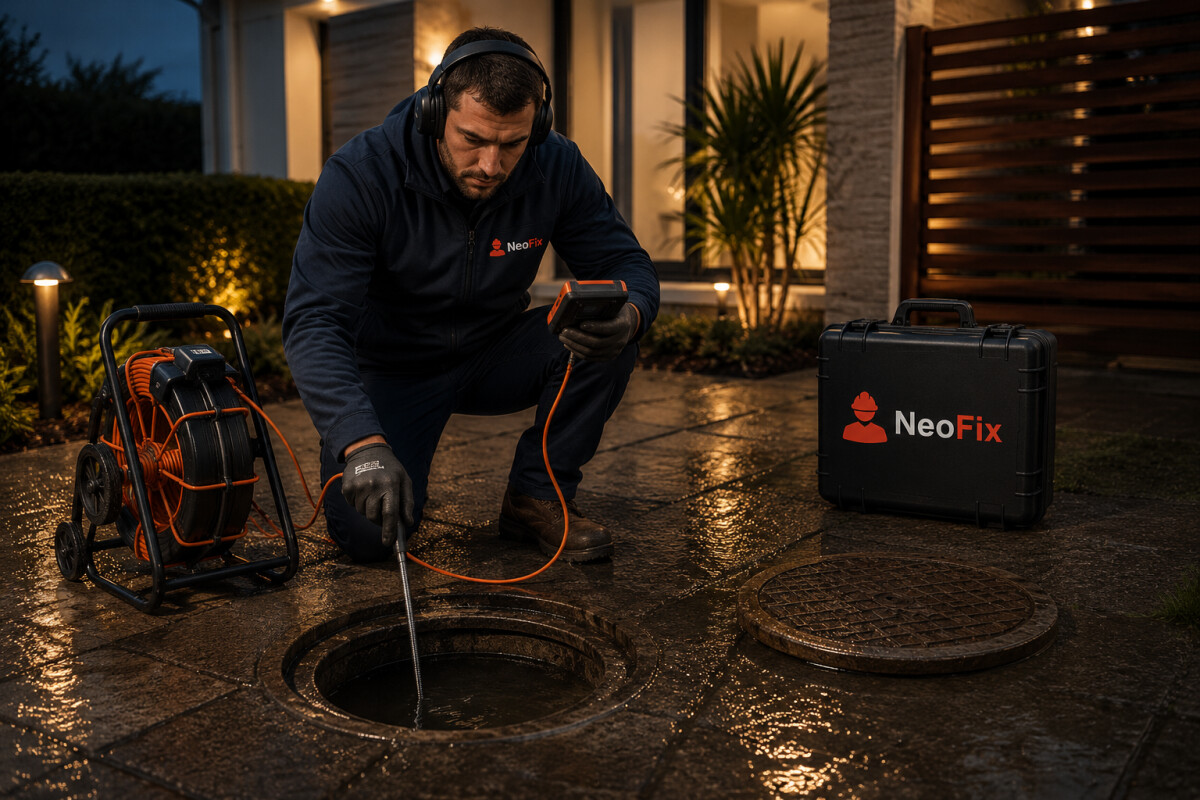
Acoustic Diagnostics
Water escaping from a pressurized pipe creates sound and vibration. A specialized acoustic device picks up this sound through the ground, concrete, or another surface.
The operator compares the sound signals picked up at different points and determines where the leak sound is loudest.
The acoustic method is often used for:
- metal pipes;
- plastic water pipes;
- yards and under road surfaces;
- central water supply networks;
- both indoor and outdoor building systems.
The accuracy of the diagnostics is affected by ambient noise, pipe depth, soil type, pipe material, and water pressure.
The Correlation Method
A correlator is a device that uses sensors installed at two points along a pipe to pick up the sound of a leak.
The system compares how long it takes the sound to reach each sensor and calculates the location of the damage.
This method is especially effective for long pipelines, where finding the exact spot by listening from the surface alone is difficult.
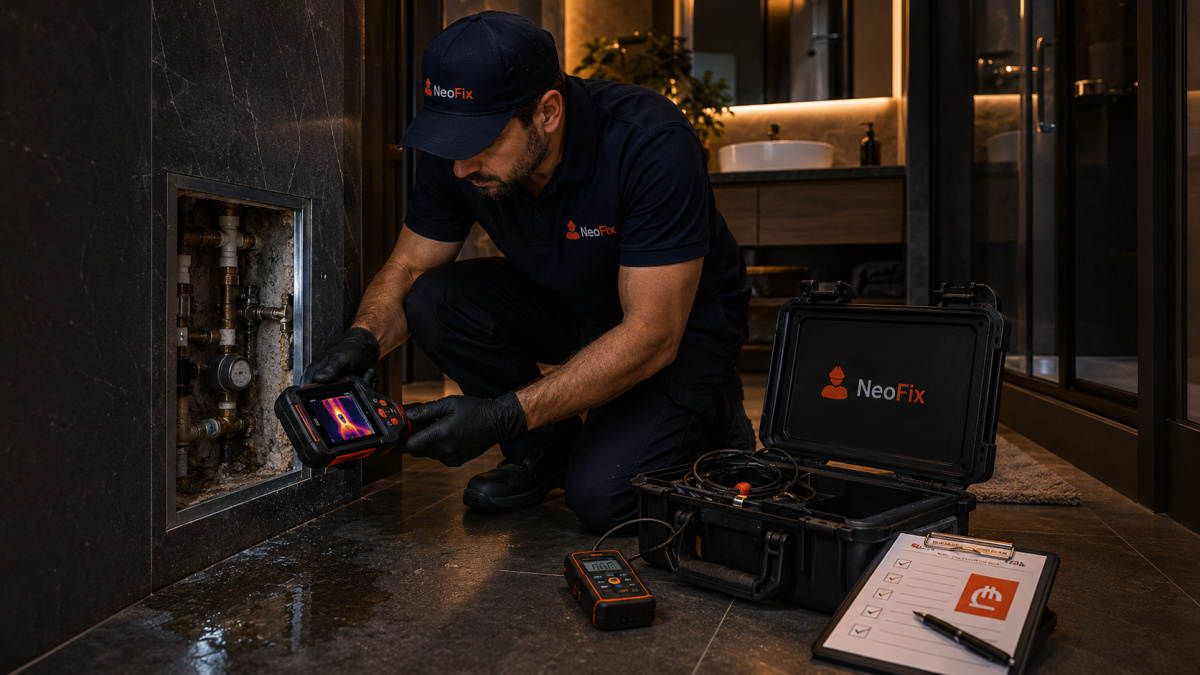
Thermal Camera Inspection
A thermal camera picks up temperature differences on the surface. Water spreading underground or under a floor can change the temperature of a specific area.
Thermal diagnostics is often more effective for:
- hot water pipes;
- heating systems;
- underfloor heating;
- indoor spaces;
- areas where moisture shows up as a change in surface temperature.
However, a thermal camera alone can't detect every underground leak. Deep cold-water pipes often require another method as well.
Tracer Gas Diagnostics
In complex cases, a safe test gas mixture is introduced into the pipeline. The gas escapes from the damaged spot, travels through the soil layers, and is picked up at the surface with a special detector.
The tracer gas method can be used when:
the leak is very small; the sound of water is faint; the pipe is plastic; the system is temporarily drained; the damage lies under concrete or a thick layer of soil; acoustic testing didn't produce a precise result.
This method often pinpoints the damaged section of pipe with high accuracy.
Moisture Measuring Devices
A moisture detector is used to identify elevated moisture levels in walls, floors, concrete, and other materials.
The device can't always find the exact hole in the pipe directly, but it provides important information for assessing the direction water is spreading and the extent of the damaged area.
Pipe Tracing
Sometimes, before a leak can even be found, you first need to determine where an underground pipe actually runs.
A special tracing device can determine a pipeline's direction, location, and in some cases its depth.
This is especially important on older properties, where the utility plan has been lost or the actual pipeline no longer matches the original design.
For the visible warning signs to watch for at home, see our article Hidden Water Leaks: How to Spot a Leak at Home Before It Becomes a Problem.
Why Are Hidden Water Leaks Dangerous?
Ignoring damage to underground pipes can lead to disastrous consequences, affecting both the building itself and the health of people and the environment.
- Structural damage: water can wash away soil around a building's foundation, causing cracks in walls and deformation of the structure.
- Financial loss: constantly running water creates enormous bills. On top of that, fixing serious damage costs far more than timely prevention would have.
- Mold and fungus: excess moisture is the ideal environment for mold, which poses a serious risk to human health.
Why Is Precise Diagnostics Better Than Digging?
Starting to dig without first determining a pipe's location often comes with additional costs.
Digging blind can mean:
damage to a large area; removal of concrete or asphalt; lifting paving stones; ruining landscaped areas; digging several test pits in different spots; expensive restoration of the surface afterward.
The main goal of precise diagnostics is to get as close as possible to the actual damage. As a result, the scope of the work, the time it takes, and the cost of restoring the surface are all reduced.
Can an Underground Leak Be Found Without Digging?
In many cases, it's possible to determine the location of the damage without opening up the surface beforehand.
That said, keep in mind that physical access to the damaged spot is still needed afterward to actually repair the pipe. The difference is that digging or opening the surface happens only at that specific spot, not along the entire length of the pipeline.
The accuracy of the diagnostics is affected by:
- pipe depth;
- pipe material;
- water pressure;
- the size of the leak;
- soil composition;
- surface type;
- ambient noise;
- the presence of other underground utilities.
In difficult conditions, using several methods together may be necessary to get a reliable final result.
An underground water leak can go unnoticed for a long time, but its consequences only grow over time — from financial costs to infrastructure damage. Modern diagnostic technology — acoustic detection, thermal imaging, ground-penetrating radar, and the tracer gas method — makes it possible to locate a leak precisely and non-invasively, without digging and without unnecessary expense. The earlier a problem is diagnosed, the simpler and cheaper it is to fix — so if you have any suspicion, it's worth reaching out to a professional specialist in time.
For a broader look at detecting and responding to a leak, read Water Leak Diagnostics: How to Detect a Leak and What to Do?